

How Real Estate Companies Are Using Automation to Reduce Operational Costs
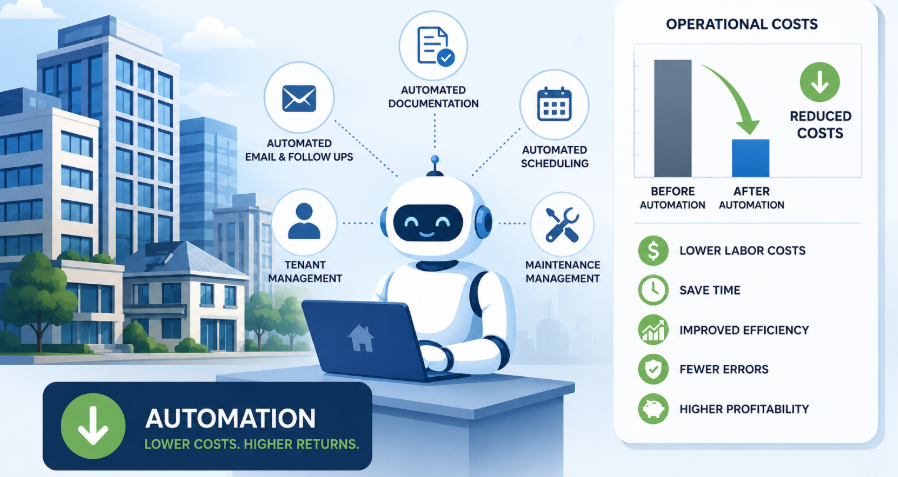
The real estate sector is undergoing a significant transformation. As property portfolios grow larger and customer expectations continue to rise, real estate companies are looking for innovative ways to improve efficiency while controlling operational expenses. One of the most impactful changes driving this transformation is automation.
From property management and tenant communication to financial processes and maintenance operations, automation is helping real estate companies streamline daily activities, reduce manual workloads, and optimize resource allocation. As the industry becomes increasingly competitive, organizations that embrace digital technologies are gaining a clear advantage.
The Growing Need for Operational Efficiency
Managing residential communities, commercial properties, and mixed-use developments involves numerous repetitive tasks. Property managers often spend considerable time handling maintenance requests, tracking payments, responding to tenant inquiries, generating reports, and coordinating with service providers.
Traditionally, many of these processes relied on manual intervention, spreadsheets, phone calls, and paper-based documentation. While effective in the past, these methods can increase administrative costs, create delays, and introduce human error.
Automation is enabling real estate companies to replace time-consuming processes with intelligent workflows that improve accuracy and productivity while lowering operational costs
Automating Property Management Operations
Modern property management platforms allow companies to automate routine tasks that previously required significant manpower.
Maintenance requests can now be submitted digitally, automatically assigned to the appropriate teams, and tracked throughout the resolution process. Notifications keep residents informed about the status of their requests without requiring constant follow-up from property managers.
By reducing manual coordination and administrative overhead, property management teams can focus on higher-value activities while improving service quality.
Streamlining Payment Collection and Financial Processes
One of the biggest operational challenges for real estate companies is managing payments efficiently. Late payments, manual reminders, and reconciliation processes can consume substantial resources.
Automation helps address these challenges by enabling:
- Automated payment reminders
- Digital invoicing and receipts
- Online payment processing
- Real-time financial tracking
- Automated reporting and reconciliation
These capabilities reduce collection delays, improve cash flow visibility, and minimize the time spent on repetitive financial administration.
Enhancing Customer Service Through Automation
Today's property owners, tenants, and investors expect fast and convenient communication. Real estate companies are increasingly using automation tools to deliver better customer experiences without increasing staffing costs.
AI-powered chatbots and virtual assistants can answer common questions, provide property information, assist with service requests, and guide users through various processes at any time of day.
This allows organizations to provide continuous support while reducing the workload on customer service teams. Faster response times also contribute to higher customer satisfaction and stronger tenant retention.
Data-Driven Decision Making
Automation is not only reducing costs, it is also generating valuable data that supports better decision-making.
Real estate companies can track occupancy rates, maintenance trends, payment performance, service response times, and operational efficiency through centralized dashboards. These insights help managers identify inefficiencies, forecast future requirements, and make informed business decisions.
Instead of relying on manual reporting processes, companies gain access to real-time information that supports proactive management strategies.
Improving Vendor and Facility Management
Large property portfolios often require coordination with multiple contractors, suppliers, and service providers. Managing these relationships manually can be both complex and expensive.
Automated systems help organizations schedule services, monitor vendor performance, track work orders, and maintain accurate records. This improves accountability while reducing administrative effort.
Facility managers can also use automation to monitor building operations and ensure resources are being utilized efficiently, contributing to long-term cost savings.
The Future of Real Estate Operations
In countries like Egypt that continue to invest in smart cities, large-scale developments, and digital infrastructure, automation is becoming a key component of modern real estate operations. Companies that embrace technology are positioning themselves to operate more efficiently, deliver better customer experiences, and remain competitive in an evolving market.
The shift toward automation is no longer simply about reducing costs. It is about creating scalable, data-driven operations capable of supporting long-term growth. For real estate companies seeking greater efficiency and profitability, automation is rapidly becoming an essential business strategy rather than an optional technology upgrade.
Conclusion
Automation is reshaping the way real estate companies operate across Egypt. By streamlining property management, automating financial processes, improving customer service, and enabling data-driven decision-making, organizations can significantly reduce operational costs while enhancing overall performance.
As digital transformation accelerates across the industry, automation will continue to play a critical role in helping real estate companies build more efficient, scalable, and future-ready operations.