

The Connected Property: How Different Real Estate Technologies Are Coming Together
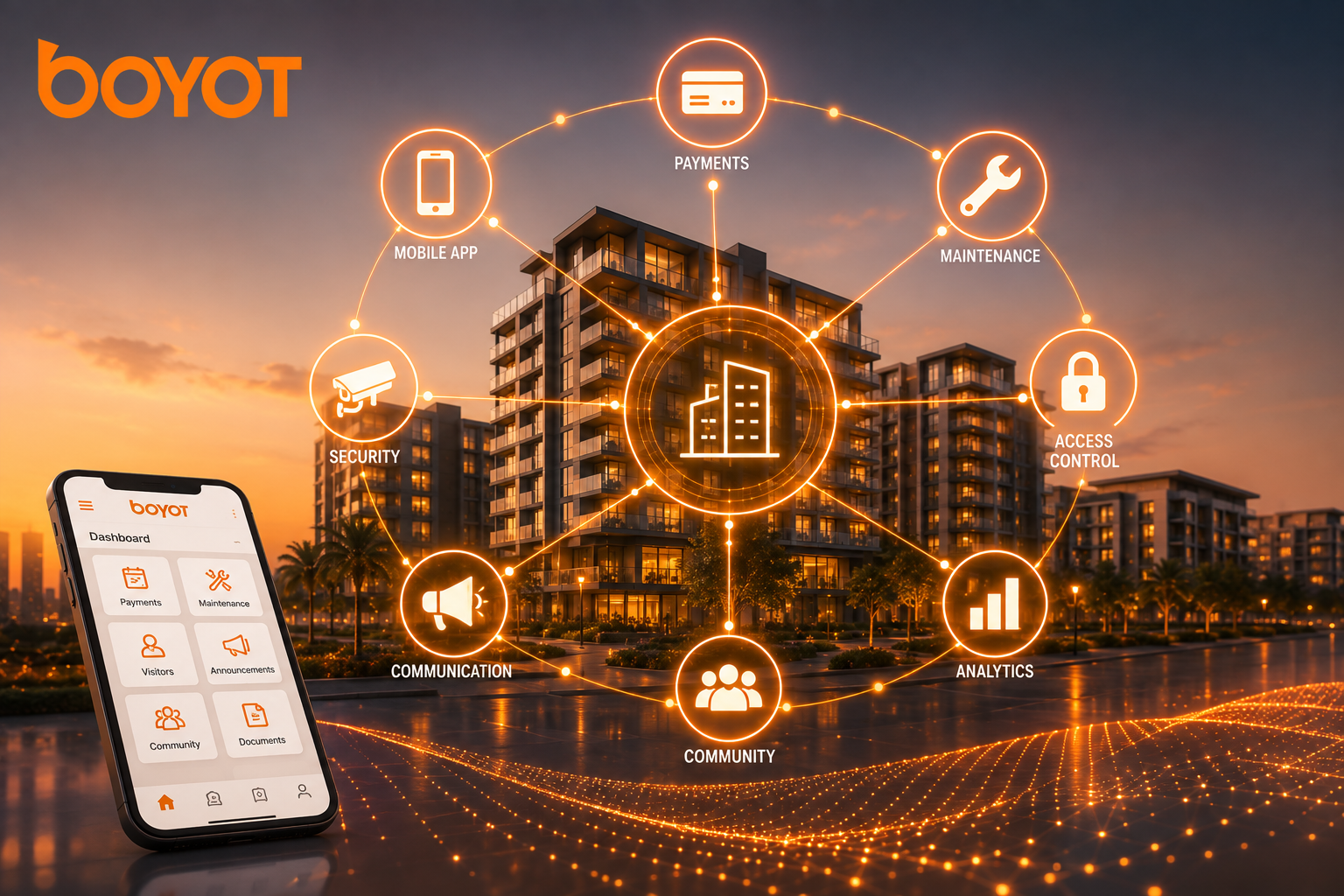
Real estate technology is entering a new phase. Properties are no longer managed through isolated systems for payments, maintenance, communication, security, and resident services. Instead, the industry is moving toward connected property ecosystems, where different technologies work together and share information to create a more efficient and intelligent way of managing real estate.
Across Kuwait, Egypt, and the wider GCC, developers and property managers are increasingly looking for technology that does more than digitize individual processes. The goal is to connect them.
What Is a Connected Property?
A connected property brings together multiple technologies and systems through a unified digital ecosystem. Instead of having separate platforms for every operational function, information can move between systems and provide property teams with a more complete picture of what is happening across their buildings and communities.
This can include:
- Property and rental management systems
- Resident mobile applications
- Digital payment platforms
- Maintenance management
- Access and visitor management
- IoT and smart building devices
- AI-powered services
- Data analytics and reporting
When these technologies work together, property management becomes more coordinated and responsive.
Why Integration Is Becoming Essential
One of the biggest challenges facing modern real estate companies is fragmented information. A property manager may have payment information in one system, maintenance requests in another, resident information somewhere else, and building data on a separate platform.
This makes it difficult to get a complete view of property performance.
Connected technology addresses this problem by bringing important information together. Instead of switching between multiple platforms, property teams can access relevant information through a centralized ecosystem.
This can save time, reduce manual processes, and improve operational visibility.
How Connected Technology Is Transforming Real Estate
1. Connecting Residents With Property Management
Resident applications can become a central point for everyday property services.
Residents can access payments, submit maintenance requests, receive announcements, manage visitors, and communicate with management through one digital experience.
This creates a more convenient journey while giving property managers a centralized way to manage resident interactions.
2. Connecting Payments With Property Operations
Digital payments become more valuable when they are connected with rental and property management systems.
Payment information can be tracked alongside contracts, invoices, accounts, and other property records. This helps property teams reduce manual reconciliation and gain better visibility into financial operations.
3. Connecting Maintenance With Building Data
Maintenance systems can become even more effective when connected with information from buildings and equipment.
For example, data from connected devices can help identify unusual equipment behavior, while maintenance platforms can organize requests, assign tasks, and track completion.
This creates a more coordinated maintenance workflow instead of relying entirely on reactive processes.
4. Connecting Data With AI
The real potential of connected properties becomes even greater when Artificial Intelligence is added to the ecosystem.
AI can analyze information from different areas of property operations to identify patterns, generate insights, and support decision-making.
Instead of simply collecting data, connected platforms can help transform that data into actionable intelligence.
5. Creating One View of Property Performance
Perhaps the biggest advantage of connected real estate technology is visibility.
Property owners and managers can monitor information such as occupancy, payments, maintenance activity, resident engagement, and operational performance from centralized dashboards.
This makes it easier to identify trends, understand problems, and make informed decisions.
How BOYOT Helps Build a Connected Property Ecosystem
BOYOT is designed around the idea that property technology should work together rather than operate in isolation.
Its ecosystem brings property management, rental management, community management, resident mobile applications, payments, maintenance, communication, and reporting into a connected platform.
BOYOT's AI-powered capabilities can further enhance this ecosystem by helping transform property data and resident interactions into useful insights and intelligent assistance.
For developers and property managers, this means fewer disconnected processes and greater visibility across their properties. For residents, it means a more seamless experience where essential property services can be accessed through one connected digital environment.
The Future of Real Estate Is Connected
The next generation of real estate technology will not necessarily be defined by having the largest number of individual digital tools. It will be defined by how well those technologies work together.
Connected properties can create better operational visibility, smoother resident experiences, more efficient workflows, and stronger decision-making.
As real estate markets in Egypt, and the GCC continue their digital transformation, connected property ecosystems are likely to become an increasingly important part of modern real estate.
The future property will not simply be smart. It will be connected, intelligent, and continuously working as one ecosystem.