

Why Real Estate Developers Are Building Communities, Not Just Properties
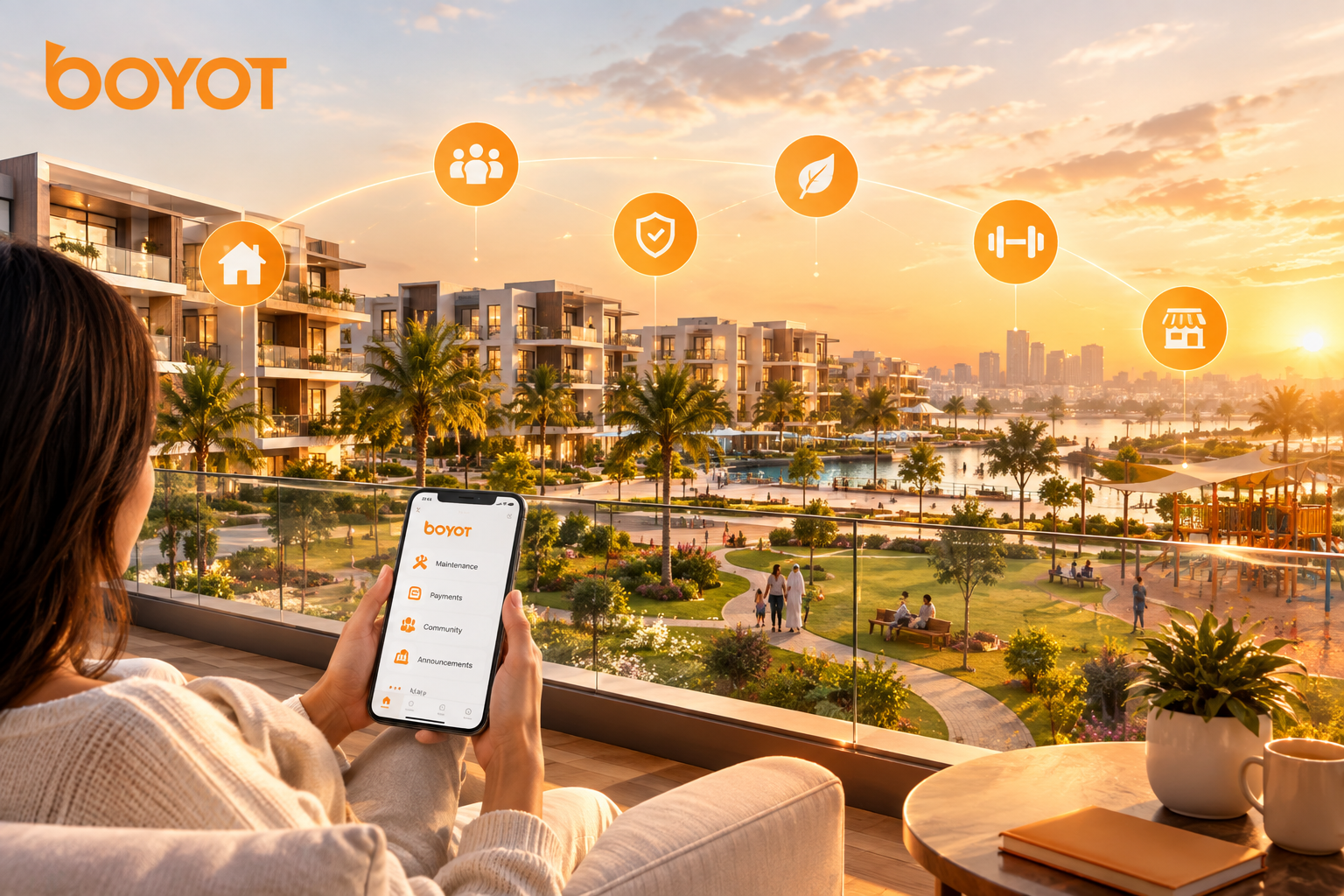
The GCC real estate market is entering a new phase where a successful development is no longer defined only by the quality of its buildings. Developers are increasingly thinking beyond individual apartments, villas, or towers and focusing on the overall community experience.
From mixed-use destinations to master-planned residential communities, developers across the GCC& Egypt are combining homes with retail, entertainment, wellness, green spaces, sports, hospitality, and essential services. Recent developments in Saudi Arabia and the UAE demonstrate this shift toward integrated environments designed around how people actually live.
For developers, this means the question is no longer simply “What property are we selling?” but “What kind of lifestyle and community are we creating?”
1. Buyers Want More Than a Home
Modern buyers increasingly look at everything surrounding a property before making a decision.
A well-designed home is important, but access to retail, restaurants, fitness facilities, parks, schools, entertainment, and social spaces can significantly influence the attractiveness of a development.
In Saudi Arabia, research shows a strong preference for large-scale, mixed-use master-planned communities, while amenities are increasingly viewed as essential rather than optional extras.
Today's community expectations include:
- Convenient retail and dining
- Recreational and fitness facilities
- Green and outdoor spaces
- Family-friendly environments
- Security and accessibility
- Digital services and connectivity
The property becomes one part of a much larger living experience.
2. Mixed-Use Developments Are Changing the GCC Property Market
One of the clearest trends is the growth of mixed-use real estate developments.
Instead of separating residential, commercial, retail, hospitality, and leisure spaces, developers are bringing them together within connected destinations.
Recent GCC projects demonstrate this approach. For example, new developments in Abu Dhabi are combining thousands of residential units with commercial, hospitality, recreational, and sports facilities within a single masterplan.
This model can create more active communities throughout the day while giving residents greater convenience.
3. Community Experience Is Becoming a Competitive Advantage
When buyers have multiple properties to choose from, the surrounding experience can become a major differentiator.
A community with attractive public spaces, convenient services, engaging activities, and well-maintained facilities can create a stronger sense of belonging than a standalone building.
This is particularly relevant in the GCC, where developers are increasingly focusing on lifestyle-led destinations rather than simply delivering residential units.
For developers, creating a strong community can therefore become part of the property's long-term value proposition.
4. Technology Is Connecting the Modern Community
Building a community is not only about physical infrastructure. Digital infrastructure is becoming equally important.
Residents increasingly expect convenient ways to communicate with management, submit maintenance requests, receive announcements, access information, and manage property-related activities.
This creates an opportunity for property technology to connect the physical community with its digital experience.
A community can have excellent facilities, but if residents still depend on disconnected phone calls, paperwork, and manual processes, the overall experience can feel outdated.
5. Developers Need to Think Beyond Handover
The relationship between a developer and its community does not necessarily end when the buildings are completed.
Once residents move in, the quality of community management and ongoing operations becomes critical.
Maintenance, resident communication, payments, announcements, service requests, reporting, and facility-related activities all contribute to how residents perceive the development.
This makes long-term operational planning an important part of modern real estate development.
How BOYOT Helps Create Better-Connected Communities
BOYOT helps property managers and developers manage the operational side of modern communities through a connected digital platform.
With BOYOT, teams can manage maintenance requests, resident communication, announcements, payments, reports, property information, and other community management activities from a centralized environment.
This helps reduce fragmented processes and gives management teams better visibility into daily community operations.
For residents, digital access can make it easier to communicate with management and stay informed. For property managers, centralized information can make it easier to track requests, coordinate activities, and maintain better service standards.
As GCC developers continue moving toward integrated, lifestyle-focused communities, technology such as BOYOT can help ensure that the digital experience keeps pace with the physical development.
The Future of GCC Real Estate Is Community-Centred
The next generation of GCC real estate will be about more than buildings and square meters. It will be about creating places where people can live, work, connect, and access everyday services within a well-planned environment.
As integrated communities become more prominent across markets such as Saudi Arabia and the UAE, developers that focus on both physical infrastructure and digital community management will be better positioned to deliver the experiences modern residents expect.
The future of real estate is not simply about building properties.
It is about building communities people want to belong to.